OPINION
What Esperanto Asks of Us
Editorial Board313 wordsEdition № 178Friday, 30 October 2026 — Edition № 178
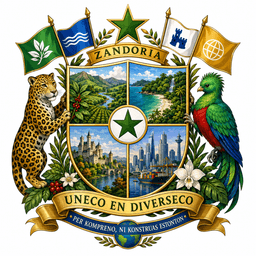
Esperanto was not chosen because it was the language of any region. It was chosen because it was the language of none. When the Meridian Convention met through 1994, the drafters could have adopted Spanish, or English, or Slovak, or Mandarin. They could have named two languages, or three, or declared that all four regional tongues held equal federal standing. Instead they chose a constructed language—one that no child in any of the four regions spoke at home, one that all four regions had to learn together.
This choice has costs. A child in Tierra Verde who grows up speaking Spanish and Guaraní must learn Esperanto to vote in federal elections, to read the Federal Charter in its canonical form, to understand the debates in the Federal Assembly. The same is true for a child in Bratislava-Nova, or Nueva Singapur, or Puerto Azul. Esperanto is not their inheritance. It is a second language, or a third, learned because the Republic demands it.
Yet the alternative—to privilege one region's tongue, or to divide federal business among four languages—would have cost more. It would have made the regions unequal at the moment of founding. It would have meant that a Tierra Verde farmer could not read a Federal Court judgment without translation, or that a Nord Europa delegate could not speak in the Federal Assembly without an interpreter standing between her words and the record. Esperanto, precisely because it belongs to no one, belongs to everyone equally.
We do not celebrate this neutrality because it is easy. We mark it because it is real, and because it asks something of every citizen. The Republic asks you to learn a language that is not yours. In return, it promises you that no other citizen's language will outrank your own. That is the bargain. It is not romantic. It is the foundation on which this polity stands.