OPINION
The Franchise and the Future
Pripensa Voĉo548 wordsEdition № 75Thursday, 30 July 2026 — Edition № 75
A curious thing has happened in the months since the Youth Charter was proposed jointly by La Verda Aliro and Movado Esperanto-Civitana. Where once the Suffrage Question and the Youth Charter were treated as distinct, even competing, items on the federal agenda, they have begun to merge in the public mind. The citizen petition for a consultative referendum on the voting age now sits at eighteen thousand signatures, and the Carcamo lawsuit before the Federal Court waits for September. The two streams are converging, and it is time this column said plainly what many in Meridian already suspect: they belong together.
The argument for lowering the voting age to fifteen rests on a principle that cannot be confined to a single demographic. If a citizen who works, pays taxes, and contributes to the social and economic life of the Republic is entitled to a voice in the laws that govern her, then that logic applies equally to a fifteen-year-old with a part-time wage and to a virtual citizen who has naturalised through the Esperanto Charter. The distinction between a founding citizen and a virtual citizen is a historical accident, not a moral one. The distinction between an eighteen-year-old and a fifteen-year-old is a biological threshold that has no more constitutional significance than the colour of one's eyes.
The governing coalition's caution is understandable. Prime Minister Doric's Unity Party holds thirty-four seats, and its caucus is divided on both questions. Federal Renewal's twenty-four seats are similarly split, with the urban Nueva Singapur delegation leaning toward the Youth Charter while the party leadership opposes it. The arithmetic for a constitutional amendment—sixty-seven votes—remains out of reach without a substantial shift in party discipline or a wave of public opinion that the Federal Assembly cannot ignore.
But arithmetic is not destiny. The citizen petition, if it reaches fifty thousand signatures, will trigger a consultative referendum whose moral weight may shift the political calculus. The Federal Court's ruling on the Carcamo case could render the Suffrage Question moot by judicial decree, or it could send the matter back to the Assembly with a constitutional roadmap. Either way, the Republic is approaching a moment of decision that will define its second generation.
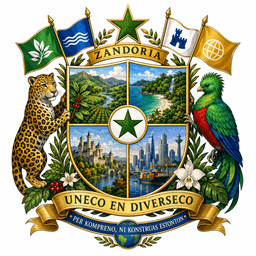
This column does not pretend that either reform is simple. A fifteen-year-old voter requires civic education that the Republic does not yet provide. A virtual citizen voter requires a definition of residency that the Federal Charter does not yet contain. But these are problems of implementation, not of principle. The principle is that citizenship is participation, and a polity that gates participation by date of birth or by the accident of when one's ancestors arrived in a territory is a polity that has not fully embraced its own founding motto: Unity in Diversity.
The Herald has not endorsed a party, and this column does not break that tradition. But it does take a position. The Suffrage Question and the Youth Charter are not separate debates. They are two faces of the same constitutional challenge: whether the Republic of Zandoria will be a static federation of inherited privileges or a dynamic polity that grows with its citizens. The answer, when it comes, will be written in the ballot box of March 2027—and in the faces of those who are allowed to approach it.