OPINION
Esperanto at Thirty-One: The Language Nobody Owned
Editorial Board444 wordsEdition № 61Thursday, 16 July 2026 — Edition № 61
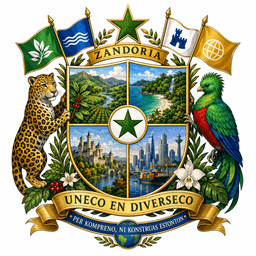
When the delegates to the Meridian Convention chose Esperanto as the language of federal governance, they were not making a sentimental gesture toward a nineteenth-century dream. They were solving a problem that had defeated every predecessor federation they had studied: the problem of whose language would be the language of power. Spanish was the working tongue of Tierra Verde and much of Costa Mar. The Tatra plateau brought Slovak-derived dialects and Scandinavian-language minorities. Oriente Moderno's delegates arrived speaking a mixture of east-Asian languages, Arabic, and Hindi. Any choice of a natural language would have been, in effect, a choice of a winner. The Convention chose, instead, a language that belonged to no one — and therefore, in principle, to everyone.
That principle has held, though not without friction. The Federal Translation Centre, which Klaus Aalto now directs from Meridian, processes an average working day's worth of Assembly debate into four regional working languages and back again, and the seams occasionally show. A legal term coined in Esperanto does not always carry the same weight when rendered into a creole-inflected English for Costa Mar's port administrators, or into the Slovak-adjacent dialect spoken in Nord Europa's rural counties. Professor Helena Marin of the University of Meridian has written persuasively that the Republic's constitutional disputes are sometimes, at their root, translation disputes — arguments about what a word in the Charter actually meant before it became something else in transit.
None of this is a failure of the founding choice. It is, rather, evidence that the choice was serious. A language that carries no freight of historical dominance still carries the freight of meaning, and meaning is contested. What Esperanto gives the Republic is a neutral starting point, not a guaranteed destination. The Federal Assembly's Wednesday Question Time — conducted in Esperanto, with live interpretation in all four working languages — is perhaps the most visible expression of what the Convention intended: a chamber where the Prime Minister and a Nord Europa backbencher and a virtual citizen watching from Nueva Singapur are all, in theory, equally at home and equally at a disadvantage.
We raise this not because the language policy is under threat — it is not — but because anniversaries are useful occasions for examination. The Republic turns thirty-one this coming January, and the suffrage debate now before the courts and the Assembly is, in one reading, a continuation of the same argument the Convention was having in 1994: who belongs, and on what terms, and in whose words. Esperanto was the Convention's answer to the last part of that question. The first two parts remain, as they should in any living republic, unfinished business.