OPINION
Esperanto and the Weight of Neutrality
Editorial Board431 wordsEdition № 137Wednesday, 30 September 2026 — Edition № 137
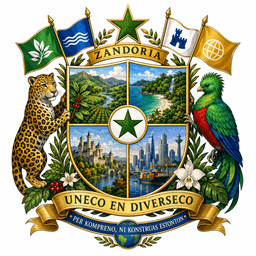
When the Meridian Convention drafted the Federal Charter in 1994, the choice of Esperanto as the federal language was not sentimental. It was structural. A federation that stretched across four continents and four distinct linguistic traditions could not be held together by Spanish, English, Scandinavian tongues, or any blend of East Asian speech. The founders chose a language that belonged to no region, that carried no historical weight from any founding people, that existed precisely because it had been invented to serve as a neutral ground. Thirty-one years later, that choice still holds the Republic together—and it still costs.
The cost is not in learning. The cost is in what neutrality demands of those who speak it. When the Prime Minister answers Federal Question Time in Esperanto each Wednesday, she speaks a language that no citizen learned at her mother's knee. When the Federal Court issues its rulings in Esperanto, the justices render judgment in words that required study. The regional working languages—Spanish in Tierra Verde, English in Costa Mar, the Scandinavian and Slovak-derived dialects of Nord Europa, the polyglot blend of Oriente Moderno—these are the languages of home, of childhood, of the particular. Esperanto is the language of the polity itself, and it asks something of every citizen: the willingness to step outside the particular and into the common.
This is not a burden the Republic should apologise for. It is, rather, the price of what the founders purchased: a polity in which no region's language dominates the others, in which no citizen is made to feel that the federal sphere belongs to someone else's linguistic home. But the price must be acknowledged. When a farmer in San Vicente or a port worker in Nueva Singapur must follow federal law through translation, when a young person studies Esperanto alongside her regional tongue in order to participate fully in the Republic's civic life, she is being asked to carry the weight of unity. The Republic owes her the recognition that she is doing so, and the assurance that the burden is shared equally across all four regions.
The suffrage questions now before the Federal Assembly and the Federal Court will shape the Republic's next decade. But beneath them lies a quieter question: whether the citizens of Zandoria remain willing to speak Esperanto as the language of their common life. That willingness cannot be legislated. It can only be earned, year by year, through the patient work of making the federal language feel not like a burden imposed from Meridian but like a bridge that each region has chosen to cross together.